
Tallow Leather Conditioner: Rugged Care for Hard-Used Leather
Key Takeaways
Grass-fed beef tallow restores the natural fats leather loses during the tanning process, conditioning deeper than synthetic or petroleum-based products ever can.
A quality tallow leather conditioner delivers deep conditioning, water resistance, and a non-greasy finish that extends the life of boots, belts, bags, saddles, and furniture.
Tallowman uses grass-fed tallow, natural ingredients, no synthetic fillers, and small-batch USA production for consistent, reliable results.
Tallow’s fatty acid profile mirrors the fats originally in animal hide, making it the most compatible conditioner for real leather goods.
This article covers what tallow does, how to use it step-by-step, and how it compares to modern conditioners so you can make the right choice for your gear.
What Is Tallow Leather Conditioner?
Tallow leather conditioner is a traditional fat-based treatment made primarily from rendered beef fat. Men have used it for generations to preserve leather and keep it working hard. Before 1940, tallow was likely the most prevalent oil for leather care globally, known in Britain as curriers grease and applied during the currying step to enhance absorption and flexibility.
Tallow itself is purified beef dripping, rendered down to remove impurities and create a stable, solid fat at room temperature. Tallowman uses grass-fed beef tallow specifically, which delivers a cleaner, more nutrient-dense base without the contaminants found in grain-fed sources.
The difference between a tallow leather conditioner and thin liquid oils or synthetic creams comes down to substance. Tallow is heavier, richer, and provides longer-lasting conditioning that actually penetrates leather fibers instead of sitting on top. While some formulas include supporting natural ingredients like beeswax and oils for spreadability and protection, Tallowman’s formula contains no synthetic fillers, dyes, or petroleum.
This is straightforward stuff for men who actually wear out their gear.
Why Tallow Works Better Than Modern Leather Conditioners
Leather loses fat during the tanning process, not just moisture. Synthetic conditioners and silicone-based products can’t replace those fats. Tallow can. That’s the fundamental difference between a quick-fix product and one that actually conditions leather from the inside out.
Deep penetration into leather fibers: Natural ingredients penetrate deeply into the leather structure, softening and conditioning from within. Unlike surface coatings that just add shine, tallow works at the fiber level where dryness and cracking actually start.
Fat structure compatibility: High quality tallow from grass-fed sources mimics the natural structure of the fats originally in animal hide. This reduces the risk of overstretching compared to overuse of pure oils like neatsfoot oil, which can make leather too soft and floppy.
Water-resistant barrier: When blended with beeswax, tallow creates a protective layer that repels water without sealing the leather completely. This gives boots and saddles real-world weather resistance while still letting the material breathe.
Non-greasy absorption: Cheap conditioners stay tacky, attract grit, and break leather down over time. A properly formulated tallow conditioner absorbs fully, leaving leather supple but not slick. The fatty acid profile—dominated by palmitic, stearic, and oleic acids—mirrors human sebum, ensuring the formula sinks in rather than sitting on top.
Tallowman’s small-batch USA production lets them control consistency and avoid the common problem of oily messes in a tub that plague mass-produced alternatives.

Benefits of a Grass-Fed Tallow Leather Conditioner
Not all tallow is equal. Grass-fed sourcing delivers cleaner fat with higher nutrient density and fewer chemical residues. That matters when you’re rubbing the stuff into gear you use every day.
Extended durability: Regular use on boots, belts, and work bags extends their usable life significantly. Conditioned leather resists cracking, drying, and seam stress that come from daily flexing and environmental exposure.
Practical finish: The end result is matte to low-sheen, non-greasy, and smooth to the touch. This suits rugged men’s gear rather than high-gloss dress leather shoes meant for the office.
Real protection: Once conditioned and buffed properly, leather develops resistance to rain, mud, and job-site grime. The combination of tallow and natural wax creates long lasting protection that holds up under actual working conditions.
Versatile application: A quality tallow conditioner works on various leather products including work boots, motorcycle jackets, saddles, harness, tack, rifle slings, tool belts, car seats, and leather furniture. One versatile leather salve handles all your leather items.
Clean ingredients: Tallowman’s leather conditioner contains no synthetic fillers, artificial fragrances, or dyes. Just grass-fed tallow, supportive natural ingredients, and nothing that doesn’t belong there.
How to Use Tallow Leather Conditioner (Step-by-Step)
This section reads like a straight instruction manual for a man in his garage or workshop. No fluff. Just what to do.
Step 1: Clean the leather. Brush off dust and grit with a stiff brush, then wipe the surface with a slightly damp soft cloth. Wait until the leather is just barely damp, not wet. Moisture helps the conditioner absorb, but excess water works against you.
Step 2: Warm the conditioner. Work a small amount between your fingers to soften it, or let the tin sit at room temperature if stored cold. Some men use low heat from a hair dryer on the leather itself to open the pores, but this is optional. The creamy texture should spread evenly when it’s at the right temperature.
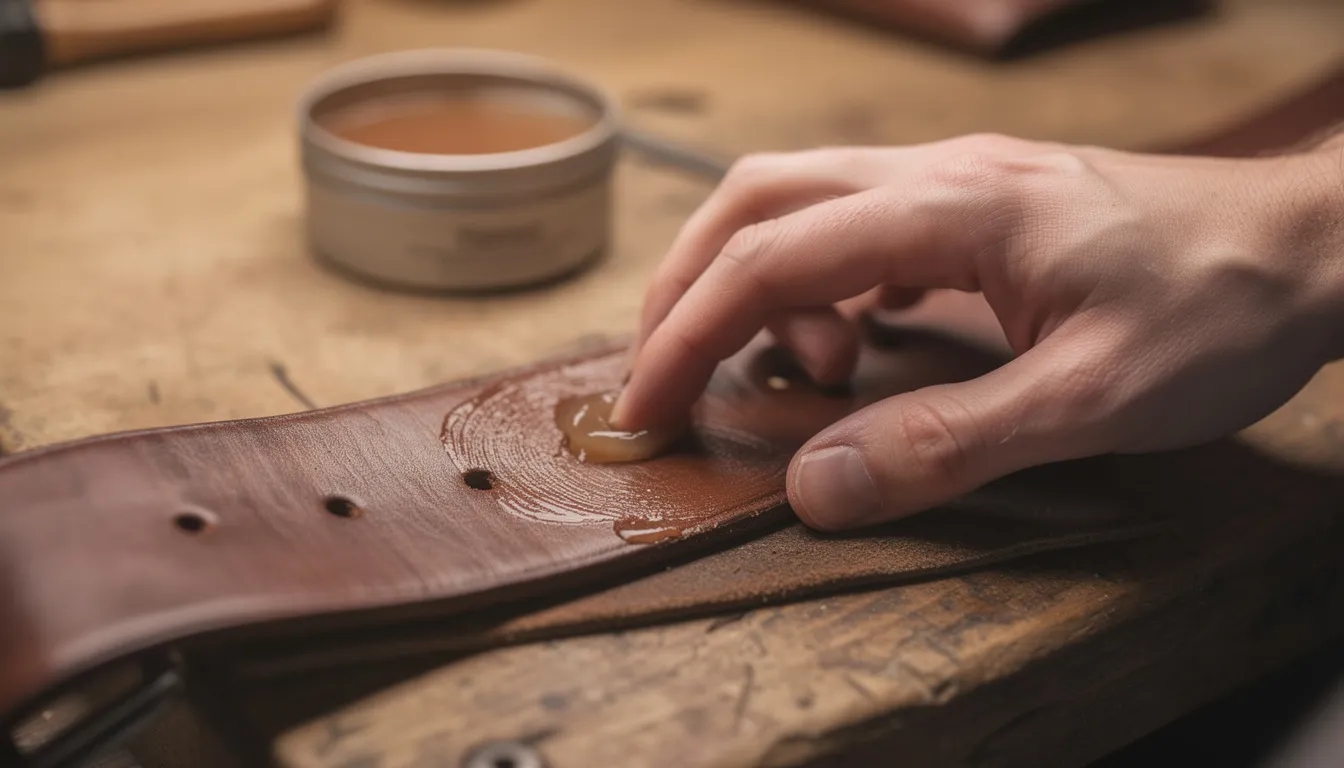
Step 3: Apply in thin, even layers. Use your fingers or a clean cloth to massage the balm into the leather using small circular motions. Focus on seams, flex points, scuffed areas, and any spots showing visible dryness. The leather wax makes easy application possible without excess buildup.
Step 4: Let it absorb. Give the conditioner 15–30 minutes to soak in. Very dry boots or saddles may need up to an hour. The leather should look slightly darkened and feel moist to the touch during this phase.
Step 5: Buff with a dry cloth. Use a clean, dry cloth or horsehair brush to buff the surface until it feels dry, smooth, and not greasy. This step is critical. Unbuffed conditioner attracts dirt and can transfer to clothing.
Second coat for neglected leather: If the leather is severely dried out, apply a second light coat spaced at least a few hours or overnight apart. Multiple thin applications beat one heavy soaking that can oversaturate the material.
Test first: Always test on a hidden area because some leathers will darken slightly when conditioned with any fat-based product. Inside the tongue of a boot, the underside of a belt, or the back of a strap works well for this.
Best Uses and When to Avoid Tallow Leather Conditioner
Tallow leather conditioner handles most hard-wearing leather, but it’s not the right choice for every type of finish. Know when to use it and when to hold off.
Ideal uses include:
Work boots and hiking boots
Everyday belts and holsters
Saddle and tack equipment
Scabbards and tool pouches
Duffel bags and briefcases
Leather furniture with a natural finish
Harness and gear straps
Seasonal timing matters. Condition leather before wet, muddy seasons like fall and spring, and after harsh winter use. Men who work outside daily should make conditioning part of their regular gear maintenance.
Avoid using on:
Suede and nubuck—tallow will flatten the nap and darken the surface permanently
Heavily buffed velvety leathers
Ultra-light dress leathers and fashion finishes that require high-gloss appearance
Patent leather or heavily painted surfaces where the topcoat acts more like plastic than true hide
If you want to keep collector or high-end showpiece leather untouched, test sparingly on a hidden spot first or consult a leather professional. Most working leather, though, responds exactly as you’d want it to.
Inside a Quality Tallow Leather Conditioner Formula
The power of a leather conditioner isn’t in a long ingredient list. It’s in a few well-chosen, high quality components working together. Here’s what goes into a formula worth your money:
Grass-fed beef tallow (primary ingredient): This is the special ingredient blend that deeply conditions and restores flexibility to dried-out leather fibers. Grass-fed sourcing ensures nutrient density and cleaner fat without the stuff you don’t want.
Beeswax (natural barrier): Adds water resistance and slight protective coating without turning the surface plastic-like. Leather wax makes the difference between leather that sheds rain and leather that soaks it up.
Supporting natural oils: Small amounts of plant oils like sweet almond oil or lanolin soften texture and improve spreadability without making the formula runny. These carriers help the tallow go where it needs to go.
What’s NOT included: Tallowman refuses to use silicones, petroleum jelly, synthetic waxes, or artificial fragrances to fake softness or shine. Those harmful chemicals might make cheap products look good on the shelf, but they don’t belong on leather you depend on.
Small-batch quality control: Handmade production in the USA keeps texture and performance consistent from tin to tin. Each batch meets high standards because someone’s actually watching the process, not just running a factory line.
Comparing Tallow Leather Conditioner to Oils, Creams, and Sprays
Walk into any hardware store and you’ll see mink oil, neatsfoot oil, and spray protectants competing for shelf space. Here’s how tallow stacks up against the alternatives.
Product Type |
Penetration |
Risk |
Best For |
|---|---|---|---|
Tallow-based balm |
Deep, controlled |
Minimal when used properly |
Work gear, daily-use leather |
Pure neatsfoot oil |
Deep |
Over-softening, stretching |
Light conditioning |
Mink oil |
Moderate |
Can go rancid, attract dust |
Occasional use |
Water-based creams |
Shallow |
Short-lived results |
Quick shine |
Silicone sprays |
Surface only |
No actual conditioning |
Temporary water repellency |
Tallow vs. pure oils: Straight oils like pure neatsfoot can over-soften and stretch leather if overused. Oil gets absorbed unevenly, and without the structure that tallow provides, leather can become floppy. Tallow stays more controlled, providing unmatched moisture without compromising structural integrity.
Tallow vs. creams: Light water-based or silicone creams give quick shine but shallow conditioning. The results disappear fast because there’s nothing substantial actually feeding the leather. This is a safe and effective treatment for the short term only.
Tallow vs. sprays: Spray-on waterproofers handle surface repellency and work better when layered over already-conditioned leather. They’re not a replacement for real conditioning—they’re a supplement.
The base treatment rule: Tallowman’s grass-fed tallow conditioner functions as multi purpose leather care—the first thing you do to feed the leather. Other products can layer on top if needed.
Simple rule of thumb: If the leather bends and flexes daily (boots, belts, gloves), it needs real fats from a unique leather balm, not just spray. A great conditioner nourish deeply. Surface treatments just delay the inevitable.
Tallowman: Built for Working Men and Their Gear
Tallowman is a men’s grooming and gear-care brand built around grass-fed beef tallow. Not trendy lab-made fillers. Not marketing buzzwords. Just all natural ingredients that work.
Non-greasy when applied properly: The unique combination of tallow and natural waxes absorbs fully when buffed, leaving leather conditioned but not slick. This formula is made for men who actually use their gear, not just display it.
Handcrafted in the USA: Every batch is produced in small runs, ensuring long lasting protection and consistent performance for leather products from boots to bags to saddles. When cart added means quality, that matters.
Natural ingredient philosophy: Grass-fed tallow, supportive natural waxes and oils—that’s the recipe. No synthetic fragrances, dyes, or cheap bulking agents. The stuff that goes into your skin care shouldn’t be different from what protects your gear.
Straightforward and effective: Tallowman products deliver an effective treatment without the marketing fluff. For men who want tough, reliable care for leather and skin, this is the brand that gets it done.
Your leather absorb what you put on it. Make sure it’s something worth absorbing.
FAQ
How often should I apply tallow leather conditioner to my boots?
Work boots worn daily in rough conditions often need conditioning every 4–6 weeks. Occasional-use boots may only need treatment every 2–3 months. Signs like stiffness, visible dryness, or lighter colored creases at flex points indicate it’s time to reapply. Don’t overdo it—light, regular applications beat heavy soaking that can over-soften leather and reduce structural integrity.
Will tallow leather conditioner darken my leather?
Any fat- or oil-based conditioner, including tallow, can darken leather by a shade, especially on lighter or unfinished hides. Always test on a hidden spot first—inside the tongue, underside of a belt, or back of a strap. Many men actually prefer the richer, broken-in look that comes with slightly darkened, well-fed leather. It’s a sign the gear is being used and maintained properly.
Can I use tallow leather conditioner on colored or dyed leather?
Yes, it can be safely used on most dyed leathers—black, brown, tan—as long as the surface is smooth and not suede or nubuck. The conditioner feeds the leather beneath the dye, helping prevent cracking and color fade from dryness. Avoid use on specialty finishes like patent leather or heavily painted surfaces where the topcoat functions more like plastic than true hide.
Is tallow leather conditioner safe on skin if I apply it by hand?
Grass-fed beef tallow has been traditionally used in skin care for generations. Tallowman’s formula avoids harsh synthetics, so incidental skin contact during application is generally fine. Wash hands after application to avoid transferring conditioner to fabrics or steering wheels. Men with known sensitivities should check the ingredient list and patch test on skin just like any grooming product. The luxurious feel of quality tallow is something your hands might actually appreciate.
Does tallow leather conditioner make leather waterproof?
It makes leather highly water-resistant, not fully waterproof like rubber or plastic. Conditioned leather will shed rain and splashes better and dry out with less damage afterward. The grease and wax components create a barrier that protects without sealing completely. Pair conditioning with good drying habits—no direct heat from radiators or heat sources, slow air-dry, recondition after heavy soaking—for maximum protection and ensuring long lasting protection for your gear.